How to Clean and Care for Custom Stone Coasters: A Stone-by-Stone Guide
To care for custom stone coasters, wipe them with a soft damp cloth and mild soap, let them dry fully face up, and keep them away from dishwashers, acids and abrasives. This guide from Custom Stone Coasters explains what changes by stone, from absorbent sandstone to etched slate, veined marble, recessed granite and terrazzo, plus storage and service routines.
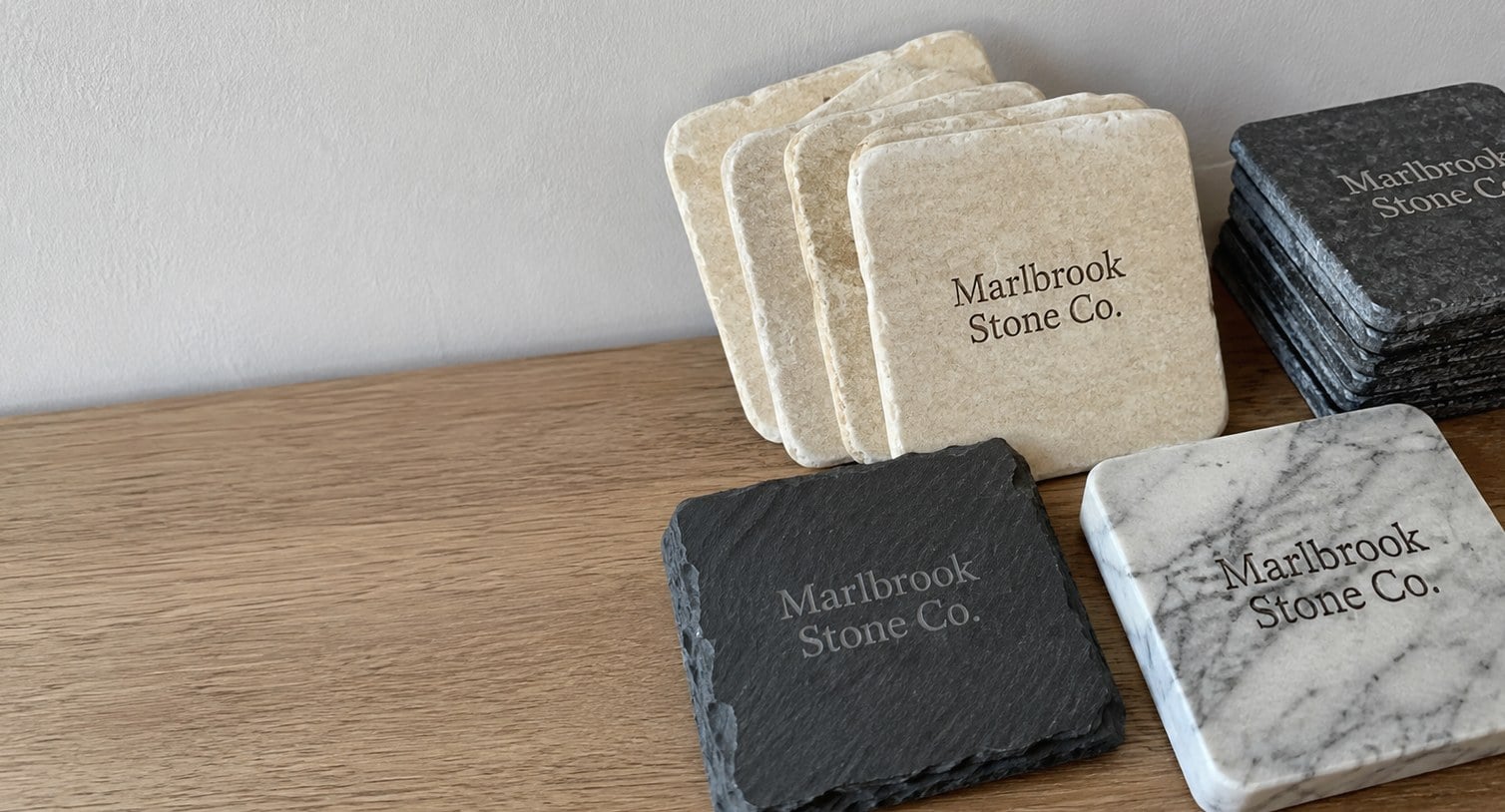
- Hand wash only: soft cloth, lukewarm water, a drop of mild soap
- Let sandstone dry fully between uses so it keeps absorbing condensation
- Keep acids and vinegar off marble to protect the polish
- Etched slate looks darker when wet and returns to normal as it dries
- Store coasters dry and separated to prevent edge chips
How do you clean custom stone coasters without damaging them?
Clean custom stone coasters with a soft cloth, plain lukewarm water and, when needed, a drop of mild pH-neutral soap, then let each coaster dry fully face up before stacking it. That routine is safe for every stone Custom Stone Coasters offers, from absorbent sandstone to recessed granite, and it protects both the stone surface and the logo.
Most damage to stone coasters comes from treating them like ceramic plates. Stone is porous to different degrees, and the decoration on top (an etched tone change, a recessed mark or a color print) is part of the surface, so harsh scrubbing and strong chemicals wear the coaster and the branding together. A gentle wipe after use does more for longevity than any deep clean.
- Lift the coaster and shake off loose crumbs or grit so nothing scratches the face.
- Wipe the top with a damp, soft cloth. Use a drop of mild soap only for sticky spills.
- Rinse the cloth and wipe again to remove any soap film.
- Pat the face dry, then stand or lay the coaster face up to air dry before stacking.
- Keep water off the backing as much as possible and let it dry completely if it gets wet.
Skip the dishwasher, bleach, ammonia, vinegar, lemon-based sprays and abrasive pads on every stone. They are the usual reasons a branded coaster looks tired long before its time.
Does each type of stone coaster need different care?
Each stone coaster in the Custom Stone Coasters range shares the same basic routine, but the details change by material. Sandstone needs time to dry, slate is forgiving, marble is sensitive to acids, granite is the toughest, and terrazzo behaves like a dense engineered surface. Knowing which stone you ordered tells you what to watch for.
| Stone | Everyday care | Watch out for |
|---|---|---|
| Absorbent sandstone | Wipe gently and let the coaster air dry between uses so absorbed moisture can evaporate | Coffee, red wine and oily spills can soak in; avoid scrubbing the printed face |
| Natural slate | Damp cloth, dry with a towel; a light wipe restores the even dark tone | Thin edges and layered faces can flake if the coaster is dropped or knocked |
| Marble | Wipe spills quickly with water only, then dry | Citrus, wine, soda and acidic cleaners can etch a dull mark into the polish |
| Granite | Damp cloth and mild soap; very low maintenance | Grit trapped in a recessed logo; brush it out with a soft brush |
| Terrazzo | Damp cloth and mild soap, then dry | Harsh chemicals can dull the surface and the color-matched chips |
If an order mixes stones, for example sandstone for a team and marble for executive gifts, include a short care note for each group so recipients do not use one stone’s routine on another.
Why do sandstone coasters need time to dry between drinks?
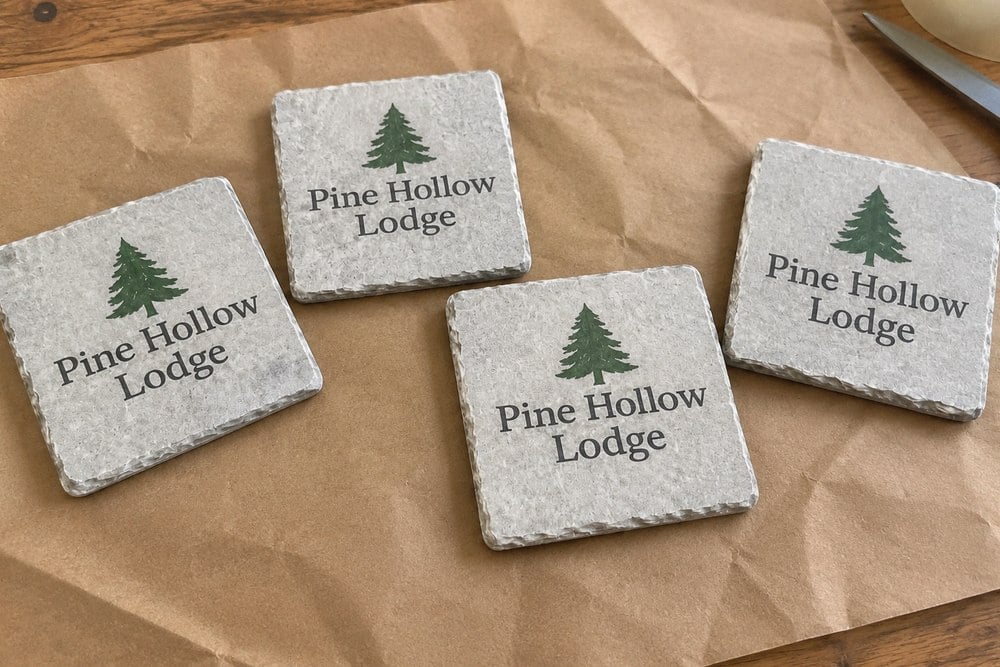
Sandstone coasters need time to dry because they work by absorbing condensation from a cold glass into the stone itself. That absorbency is the reason buyers choose absorbent sandstone coasters, and it also means a coaster that sat under a sweating glass all afternoon holds moisture that has to evaporate before the next round.
In a home or office this happens naturally overnight. In a busy setting, such as a tasting room, a conference lounge or a reception that serves drinks all day, rotating two sets keeps a dry coaster under every glass. A sandstone coaster that never gets a chance to dry will absorb less and can develop a darker damp patch that slowly lightens again once the stone dries out.
- Stand used sandstone coasters on edge or lay them face up somewhere airy, not stacked in a closed drawer.
- Blot spills like coffee or wine at once rather than wiping them across the face.
- Expect natural, gradual color changes on heavily used pieces; stone ages, it does not stay factory-fresh.
Because the logo on sandstone is usually a color print on a soft matte face, a light touch matters more here than on any other stone in the range.
How do you keep an etched or printed logo looking sharp for years?
An etched or printed logo on stone coasters stays sharp when the face is cleaned gently, kept away from abrasives and dried before stacking. The decoration method shapes the risk: a laser etched mark on slate or marble is part of the stone and will not peel, while a color print on sandstone sits at the surface and rewards a softer touch.
On laser etched stone coasters the logo is a tone change in the stone, so it wears only as the stone itself wears. On slate, the etched area can look lighter when the coaster is dry and darker when wet; that shift is normal and settles back as the coaster dries. On granite, a recessed logo can collect dust or crumbs, and a soft dry brush clears it without touching the surrounding polish.
Printed coasters do best with three habits:
- Never scrub the printed area with a scouring pad, magic eraser or stiff brush.
- Do not slide glasses or bottles across the face; lift and set them down.
- Avoid stacking damp printed coasters face to face, which can transfer residue between them.
When you request a mockup, Custom Stone Coasters can talk through which method suits how hard the coasters will be used, so the decoration matches the setting from the start.
What is the best way to store stone coasters when they are not in use?
The best way to store stone coasters is dry, flat and separated, so stone faces never grind against each other. A coaster holder, the original gift box or a simple stack with a soft layer between pieces prevents the edge chips and surface scuffs that make a set look worn even when it has barely been used.
Stone is hard but brittle at the edges. Dropping a stack into a drawer or tossing loose coasters into a bin is the fastest route to a chipped corner. For gift buyers, boxed stone coaster sets double as long-term storage: the recipient can keep the set in its divided box when entertaining is over, and each coaster stays protected in its own slot.
- Store coasters only when completely dry, especially sandstone.
- Keep sets away from radiators and direct heat, which can stress the backing adhesive.
- For venues, keep spares in their shipping packaging until they are needed.
- Label boxes by stone if you hold several types, so staff use the right care routine.
Bars, hotels and wineries that reorder should store a few untouched spares; they make a useful reference when matching a future batch.
How should a bar, hotel or tasting room care for stone coasters in daily service?
A bar, hotel or tasting room should treat stone coasters as reusable service items with a simple end-of-shift routine: collect, wipe, dry and rotate. Building that routine into closing duties keeps branded coasters looking consistent from table to table and stretches the life of every set you order from Custom Stone Coasters.
Service settings put far more wear on coasters than a home ever will. Glasses are set down hundreds of times, spills sit longer during a rush and coasters get carried on trays with cutlery. A short written routine for staff prevents the common shortcuts, like running coasters through a glass washer or using the same sanitizer spray used on steel bar tops.
- Collect coasters with the glassware, not under it, so they are not crushed on the tray.
- Wipe with a damp cloth and mild soap at the end of service.
- Dry face up on a clean towel or rack overnight.
- Rotate a second set into service while the first set dries.
- Retire any piece with a chipped edge so it does not scratch tables.
Venues pouring wine can see the stone-by-stone details on the winery and tasting room page. For heavy use, granite and slate handle wear best, while sandstone is the choice when absorbing condensation matters most.
When should you replace or reorder stone coasters?
Replace or reorder stone coasters when a piece has a chipped edge, a lifting backing or a logo that no longer reads clearly, or when a set is short enough that tables no longer match. Well-cared-for stone coasters last a long time, so most reorders come from growth, loss or breakage rather than from the stone wearing out.
Plan reorders before the last spare is used. Custom Stone Coasters sends a free mockup within 24 hours, you pay nothing until you approve the design, and standard turnaround is about 2 weeks after approval, with faster turnaround available through express shipping. Natural stone varies from batch to batch in veining and tone, so keep your approved artwork, the stone type and the decoration method on file to make the new coasters sit comfortably beside the old ones.
Start with the how it works page, then send your details through the quote form. Mention which stone you have now and how the current set has held up, and the mockup can reflect any change, such as moving a high-use bar from sandstone to granite.
Frequently asked questions
Can stone coasters go in the dishwasher?
Stone coasters should never go in the dishwasher. Hot water, strong detergent and the drying cycle can stress the stone, loosen the backing and wear down a printed logo. Custom Stone Coasters recommends a soft cloth, lukewarm water and a drop of mild soap instead, followed by air drying face up. The hand routine takes seconds and keeps the coasters looking new far longer.
What cleaner is safe to use on marble coasters?
Marble coasters are safest with plain water or a pH-neutral stone soap on a soft cloth. Avoid vinegar, lemon, bleach, ammonia and general bathroom or kitchen sprays, because acids and harsh chemicals can etch the polished surface. Wipe the coaster, rinse the cloth, wipe again to remove film and dry it straight away. Prompt wiping of wine or citrus drinks matters most.
How long does a sandstone coaster take to dry after use?
A sandstone coaster dries at a pace set by the room, the amount of condensation absorbed and the airflow around it, so drying time varies. Leaving each coaster face up or on its edge overnight is the reliable approach. Busy venues using Custom Stone Coasters sandstone often rotate two sets, so one dries while the other is in service.
Can red wine stains be removed from sandstone coasters?
Red wine on sandstone coasters soaks into the stone quickly, so blotting at once is the best defense. Press a clean cloth on the spill instead of rubbing it across the face. Light marks often fade as the coaster dries, but deep stains can remain as part of the stone's character. Venues serving lots of red wine may prefer slate or granite for heavy use.
Will cleaning wear away the logo on printed stone coasters?
Gentle cleaning will not wear away the logo on printed stone coasters, but abrasive pads, stiff brushes and strong chemicals can. Wipe the printed face lightly with a damp cloth and dry it before stacking. Custom Stone Coasters can advise during the free mockup stage whether an etched or recessed method suits a setting where coasters face heavier daily handling.
Why does my etched slate coaster look darker when wet?
Etched slate coasters look darker when wet because water deepens the natural tone of the stone and narrows the contrast between the etched area and the surface around it. The logo returns to its normal lighter gray once the slate dries. Nothing has been damaged, and no special treatment is needed beyond wiping and letting the coaster dry fully.
How do you clean dust out of a recessed logo on granite coasters?
Granite coasters with a recessed logo can be cleaned with a soft, dry brush such as a clean makeup or paint brush. Sweep the recess gently to lift crumbs and dust, then wipe the polished face with a damp cloth and dry it. Avoid toothpicks or metal tools, which can scratch the edges of the recess and the surrounding granite.
What should I do if the backing on a stone coaster gets wet?
A stone coaster with a wet backing should be set face down on a dry towel or stood on its edge so the underside can air dry completely. Avoid stacking or boxing the coaster while the backing is damp. Repeated soaking can weaken the bond between stone and backing, so wipe the face carefully and keep water off the underside.
Can I include care instructions with gift stone coaster sets?
Gift stone coaster sets benefit from a short care note so recipients know to hand wash, avoid acidic cleaners and let the stone dry. Mention the care card when you request your quote from Custom Stone Coasters, and the details can be planned alongside the artwork and packaging. A note matters most for marble and sandstone, which suffer most from the wrong cleaning habits.
Are chipped stone coasters still safe to use on wooden tables?
Chipped stone coasters can scratch a wooden or lacquered table if a sharp edge or loose fragment touches the surface. A small chip on the top face is usually only cosmetic, but a chip near the base edge or a lifting backing is a reason to retire the coaster. Venues should check sets during cleaning and pull damaged pieces before the next service.
Which stone coaster is easiest to look after in an office kitchen?
Granite stone coasters are usually the easiest to look after in a shared office kitchen because the dense stone shrugs off spills and needs only a damp cloth. Slate is also forgiving. Sandstone absorbs condensation from cold drinks but needs drying time, and marble needs prompt wiping of coffee and juice. Custom Stone Coasters can mockup the same logo on more than one stone.
Get a free mockup for your stone coasters
Send your logo or idea and the quantity you have in mind. Custom Stone Coasters returns a free mockup within 24 hours, you approve the design before anything is produced, and standard turnaround is about two weeks with faster options available. Get a custom quote.